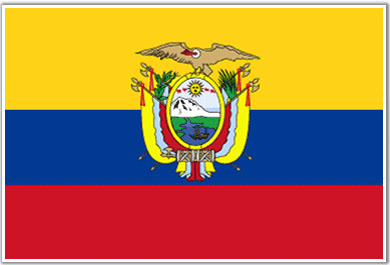
Thursday, April 26, 2012

español (Spanish)

I've had a lot of people asking how it's going with Spanish here.  Overall, it's been fairly painless and almost effortless.  I'm certainly gaining in filling the small pages of the little book I carry around with me to write down new Spanish words to look up or English words to look up how to say in Spanish.  The medical abbreviations and physical exam, of course, are the most challenging new thing and the ones I use most often (some of them, at least).  It reminds me how much of its own language medicine is, with the abbreviations I now take for granted.  UTI (urinary tract infection), CVA (cerebrovascular accident - stroke), AMI (acute myocardial infarction), CBC (complete blood count), UA (urinalysis), PE (pulmonary embolism), po (per os - oral), q6h (every 6 hours), r/o (rule out), and many more all have their own parallels in Spanish.

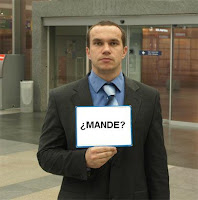
Ecuador doesn't seem to have quite as much pachuca (Costa Rican word for slang) as Costa Rica from what I can tell.  There have been a few interesting exceptions, including some medical stuff (but I won't get into the fact that I have to ask personal questions of patients on a regular basis and that they say some of them differently here).  Perhaps the most common thing that was new to me is the use of mande to mean "What?" or "What did you say?" 

God seems to be much more an accepted part of Latin worldview, and it shows up in the language.  I commonly tell patients, Que Dios le bendiga (May God bless you) in Spanish, which I would almost never say in English, not because I don't wish it for those I encounter but simply because it's not as much an assumed part of the shared worldview.  I have also had a number of patients refer to future plans with the conditional si Dios quiere (if God wants/wills).  I'm not sure how much of that is a conscious self and public reminder of our own place in the controls of the world and our lives and how much is simply an unconscious saying, but it is a good reminder to me at any rate, whose lack of familiarity with the common use of the phrase forces me to encounter it and its message anew.

I thought Costa Ricans were known for diminutives, which is where they get their name Ticos (from adding -tico to the ends of words).  But Ecuadorians certainly do it a lot.  Nearly everyone's names that end in a vowel (and even if they don't) becomes "-ito" (e.g. Marita, Anita, Pablito, etc.).  It is added to terms of affection, which are used much more liberally here, such as asking someone to climb onto the examining table with the affectionate term mi hijito/a (my little son/daughter).  This is commonly used with patients regardless of whether the patient is one's senior in years or not, although it's certainly used more with children.  It's not the paternalism it would imply in English, but it is taken for granted to be a more demonstrative relationship than many physician-patient relationships in the States.

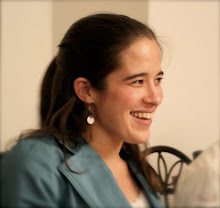
Obviously not my picture.  (For those of you who don't know, that's not me.  :))  But just too cute not to use.

Thinking of terms one calls children, I love the variety of terms Spanish has for crooning at babies:  mi cielo (my heaven), mi amor (my love), cariño (affection), mi vida (my life), mamita (literally, little mom, but it doesn't really translate like that), mi reina (my queen), and corazón (heart) among others.  Many of those things I would never be comfortable saying in English to random babies, but I croon many of them regularly as I examine newborns or see infants in the consulta externa (outpatient clinic).  I don't know for sure what parents think of it, but I think in general Latin culture probably doesn't mind the affection.  :)  At least, I sure hope so!

Saturday, April 21, 2012

friends

My first night in Ecuador was very lonely.  I am used to living with two housemates and a dog, and the change to a relatively large, empty apartment by myself after a week with my family was rather abrupt.  That has changed dramatically thanks to the Ecuadorian residents and interns that have shared call, stories, evenings out for dinner, laughter, meanings of vocabulary words, eating hospital-prepared food, and cooking with me.

There are three Ecuadorian residents, most of whom are in family medicine doing their post-grad (residency) but some of whom are licensed physicians who have finished medical school but haven't decided to do residency in a specialty yet.  My first group of residents had two family med post-grads, a second and third year, and one general practitioner.  Then there are three interns, who are sort of equivalent to fourth year medical students since they aren't physicians yet but who have finished more than two years of rotations and function more on an intern level.  They are comfortable doing much that I don't generally do, including drawing blood, starting IVs, giving neb treatments, etc.  On the other hand, I'm comfortable managing things they don't see as much of like COPD or CHF.

This is Marita, Anita, and Marito on a trip to Puyo for volquetero, an Ecuadorian typical snack/meal.  Anita is a GP equivalent, and Mario and Marita are interns. 

One of my favorite evenings hanging out with the residents occurred this past week when we decided to make burritos together.  They also requested apple pie.  I obliged with an easier (since we didn't have a pie pan) apple crisp.  We went shopping together, and I discovered parts of Shell I didn't know existed.  We made the meal together, and I found out the Ecuadorian way to make burritos (no separate tomatoes or cabbage, my family's usual, but tomatoes cooked with ground beef and onions).  During the meal preparation, they took turns helping and sitting in front of the TV karaoke machine, unself-consciously singing along with the microphone to various folk songs.  It was great fun to sit down together, all eight of us (with an American college student visiting for the week thrown in), and talk and laugh and enjoy a break.  Even the call team was able to be there for the evening as they had a slow night.  Here are some of the pictures.

Estefania, Marito, and Marita, our three interns, helping to shred/crumble the cheese.  I am thankful they will continue with me another week as the residents change rotations this weekend and will go back to Quito.

Our American college student shadowing for the week, Courtney, and la Gaby, an Ecuadorian second year family practice resident who has the unenviable task of balancing a 2-year-old with her and her physician husband's schedules (he works at a children's hospital ICU in Quito).

Anita, our GP, and I.  She plans to go into internal medicine and possibly palliative care.  We have shared call while I'm too cowardly to take call on my own as the sole resident, and she's been great to work with, a patient fount of vocab words, jokes, songs, explanations, and support.

Pablito, our third year family medicine resident, provided most of the meal production entertainment.

Most of the crew, although Pablito took the picture and Marita had gotten called away to the emergencia to see a patient.

I am so thankful for the quick welcome and easy friendship of these other young adults.  It has been a humbling pleasure to be so easily included in their activities, and it makes me wonder how often I do as good a job at making others feel welcome.  Their medical knowledge is impressive, and their social circle is unquestionably a huge part of why I am enjoying my time here.

Ecuadorian beauty

Somehow a week into my time here, I've already become accustomed to the hushed patter of raindrops on the broad leaves of the tropical trees and plants across from my house.  Despite this, I still find the musical rainfall on the metal roof overhanging my porch enchanting. Because it's rainy season here, there are almost always clouds in the sky.  The mists of low-lying clouds hang suspended over the foothills of the mountains as the rain begins to sprinkle.  The snow-capped mountain tops of the Andes to the west that I saw this morning are now completely covered by the blanket of clouds lying over and between me and them. 
 
  
I'm not very good at capturing this, but the mountain barely visible on the left third over the hospital of the first picture is one of several active volcanoes in the area (relatively).  We saw ashes rising from it the other day.  The mountains in the second picture have snow when it's clear.

Seeing the snow-capped mountain tops on a clear day, usually in the morning on my walk to the hospital to round on patients, is striking.  With the near-constant cloud cover, I miss the stars, but the clouds make for glorious sunsets, sunrises, and vistas.  I find myself wishing for a water tower or something to climb from which to have a higher view. 


There is also amazing natural beauty.  There are some flowers that look familiar, and many that are not.  They range from rose bushes to orchids to poinsettia bushes to the brightly colored bougainvillea I have enjoyed in other locations.

These beautiful flowers are some of several outside my door. Second, a close up of the flowers that grow outside my door.  The detail and colors amaze me.
These are some of my neighbor's rose bushes and beautiful periwinkle-colored flowers that grow outside my neighbor's house.
A bird-of-paradise (I think, at least) on a evening walk with some of the residents and interns.

Friday, April 20, 2012

pacientes 2

The interesting cases continue.  We had a 70-year-old woman come into the emergency room the other day complaining of 3 months of feeling like her entire left side was amortiguado (numb).  On exam, we weren't entirely convinced that she was actually numb or if she was having paresthesias or just decreased sensation, so the attending came in to confirm the story.  He pinched her, used a tuning fork, and finally poked her with a needle, drawing blood without reaction, confirming that she was in fact numb.  Although MRIs are not readily available here, she had had a normal head CT, so she probably had a small lacunar stroke that didn't show up on the head CT that left her with hemianesthesia.  She was complaining of also having pain, and apparently one can get a delayed central pain syndrome after a unilateral sensory loss.  Since gabapentin is not readily available, we started her on amitriptyline and had her follow up as an outpatient. 

Another case that will stick with me is the previously well 4 month old baby boy who came in with severe pneumonia.  He progressed to intubation and was being managed on our vent but was requiring high pressures and had worsening chest X-rays and we were unable to wean the oxygen requirement.  It looked like a picture of juvenile respiratory distress syndrome, and when he did not improve, we tried to transfer him to Quito but were unable to due to a severe storm.  His mother stood by for days, watching her baby's swollen body fight with the vent and periodically asking us when she could breastfeed him again.

 For those of you who are non-medical, white in the lung fields is bad.  Our baby started out with a pneumonia (top left), progressed to respiratory distress syndrome (mid right) and then improved to nearly normal a few days after our prayer.

The day the transfer couldn't happen, we went into the room and talked with the mother about his poor prognosis.  At the end of our talk where we confirmed that he could die from this (and I was thinking he probably would), the attending asked if we could pray with her.  She agreed, so the three of us stood around the bed with the struggling little body and prayed.  My heart was heavy as we walked out.  The next day, however, against all odd, she came off the ventilator and was switched to CPAP.  The following day he was on nasal cannula oxygen and that was rapidly weaned down.  He remained in the hospital several days after his oxygen requirement had finished to finish his required days of IV antibiotics, smiling at everyone as his mother carried him around the halls, but he went home today.  His story is part of the reason I want to work overseas.  I want to see God do miracles.  And I can honestly say I think I just did. 

I have gotten to see a good bit of obstetrics here.  We had a delivery the other day for a 44-year-old woman whose 10th child this was.  I have to say I don't think I've ever delivered someone with quite so many G's (pregnancies) and P's (births).  For the most part, OB is similar, although little things are different, like how they hold their hands to try to avoid tears during delivery, a practice of cleaning everything around the birth canal before the baby is born, the routine use of intermittent fetal monitoring (about every 2 hours until pushing and then often after only every few pushes).  The complications are the same, though, and there was a shoulder dystocia a few days ago (although not on one of my deliveries) and an external cephalic version today of a breech baby.  One of my deliveries there was more blood loss than expected, and it turned out to be a cervical laceration, which I had never seen. The patient had gone from 6 cm to 10 cm (fully dilated) in 40 minutes, much faster than expected even for her second delivery, which is a risk factor for cervical lacerations.  The attending repaired the laceration, and it was good to get to see how to do that.

I've also seen some routine things I hear about in the States but just hadn't seen yet.  One of the few overweight children I've seen, a 10-year-old girl, came in with difficulty walking for past week and severe pain with any movement of her right hip.  It turns out she has a slipped capital femoral epiphysis (SCFE - the top of the long bone in the thigh essentially gets shoved off to the side), so one of our surgeons took her to the OR for a fixation.  Based on an ultrasound, clinical history with irregular menses, and infertility, I diagnosed a patient in clinic with polycystic ovarian syndrome (PCOS) and started her on metformin in hopes of increasing her chances of getting pregnant.  I had a 7-year-old girl in the outpatient clinic with diarrhea who turned out to have both amebic dysentery and giardiasis.

 This was our little girl with SCFE before and after fixation of her epiphysis.  You can just barely see in the picture that her right epiphysis ends lower than her left.

I'm on call again tomorrow, so I'm off to bed but hope to write more soon about how it's going with Spanish and about what life is like here.

Monday, April 16, 2012

pacientes (patients)

My first week at Hospital Vozandes del Oriente has been a mix of time spent in their small emergency department (three beds) where I see anything from headaches to a monkey bite to dressing changes from previous wounds; clinica externa, the outpatient clinic with its usual mix of prenatal care, gyn visits, checkups, and so on; and hospitalización, the inpatient service which includes surgical and medical patients and has been between 8-12 patients.  Each resident follows the patients they admit, but we all hear reports on everyone and often help with dressing changes on others' patients if we are on call or in emergencia, so I have been able to see a wide variety of cases, including many things I've never seen in the States.

One patient was a 74-year-old indigenous woman from adentro (inside - i.e. inside the jungle) who came in with her seventh snake bite.  Ecuador has two types of snakes, Bothrops snakes (pit vipers) called "X" (equis) for the X-like pattern on their back and corales, coral snakes with red and black markings.  The venom of X is cytotoxic while corales are neurotoxic.  Most snake bites, at least that make it to the hospital, seem to be cytotoxic, and there is a risk of blood clotting problems (DIC), renal (kidney) failure, hypotension, and rhabdomyolysis (muscle breakdown) as well as subsequent infection.  There is a snake bite protocol we follow, which includes doing a whole blood clotting test by taping a clean test tube of blood to the wall for 20 minutes and observing to see if more than 50% of the tube is a clot by that time.  If not, the patient needs antivenom (antiofídico).  There is a risk of allergic reactions since the antivenom comes from horses, so we pretreat with Benadryl and steroids (hydrocortisone) and have epinephrine (adrenaline) on hand in the case of an allergic reaction. This woman thankfully did not have an allergic reaction, although she did develop cellulitis later, which was treated with Augmentin.


We also had a 45-year-old male and 35-year-old male come in within a day of each other with electrical burns, one from accidentally contacting an electrical wire during house construction and the other from being struck by lightning during one of the many storms here.  In my subsequent reading, it seems that up to 40% of serious electrical injuries are fatal while up to 30% of those struck by lightning die.  The major risks are cardiac arrhythmia, respiratory failure, and burns.  Bones have higher resistance to electrical current than muscle, so they can heat up and cause serious deep burns, damage to the bones (even osteonecrosis), and muscle injury while the surface burns appear mild.  IV fluids are required as well as cardiac monitoring.  The man with the lightning strike actually went home after a few days with relatively mild injuries, but the other patient has larger areas of second- and third-degree burns, and his outcome still remains to be seen.  He requires sedation for dressing changes, and thankfully we have a morphine pump for his pain control.

On my second call this week (it's been every 2-3 nights together with an Ecuadorian resident until I am comfortable on my own and an "intern" equivalent to a fourth year medical student), we had a 14-year-old girl with monkey bites on her buttock and legs.  Apparently she was eating sugar cane, and the monkey decided to attack her.  We were told that one is not to bring any food or bags or wear jewelry Besides needing suturing of her wounds, monkey bites also carry a risk of rabies and a risk of B virus (Cercopithecine herpesvirus 1) infection, especially in bites from macaques, which can cause a fatal encephalomyelitis in humans.  We don't have macaques here, but untreated B virus has a mortality rate of 80% prior to aniviral therapy, so we sent her with acyclovir prophylaxis anyway.  She also got her first rabies shot of a series of four or five (I think on day 0, 3, 7, and 14 is the regimen in the States) and Augmentin for prevention of infection.  We saw her back for curación (dressing change) today, and her wounds are well-approximated (aligned) without signs of infection.

More stories later this week. In the meantime, I will be avoiding eating sugarcane in front of any monkeys (and avoiding monkeys in general!).  I also look carefully where I step and where I put my hands to avoid any snakes or other unknown and unwanted encounters!

Thursday, April 12, 2012

arrival and adjustments

After two missed flights and two re-bought flights in the past week and a half, two flight delays and reschedulings of connecting flights, some stress-filled and near-tears unloading of my frustrations on my family and boyfriend, and several hours of lines for check-in and security, I arrived in Ecuador at 8 am the morning of Easter Sunday and to Quito, my pick-up point, around 11:00 am.  Guided by a sign with my name on it, I met up with a driver arranged by HCJB (the missions organization who run the hospital) who drove me to one of the missionary docs and his family, who then drove me to with them back to Shell. 

The drive through the Andes down to the edge of the Amazon basin was gorgeous with beautiful peaks and crevices, many small waterfalls and streams from the heavy recent rains, and green, green, green.  It was interesting watching the vegetations change from tall coniferous-looking trees to the jungle-like ones with a patch of leaves a top a bare trunk, palm-looking trees, and giant ferns.  Random bits of color in bright flowers were scattered throughout both types of foliage.

 (not mine b/c I lost my camera in my bag - only to find it later - but the ride to Shell did look very similar to this)

A brief introduction awaited me on my arrival in Shell, including a tour of the hospital and a showing of where I obtain clean filtered water.  The hospital is certainly the best-equipped mission hospital where I have worked, at least in the sense of Western medicine.  It is divided into consulta externa (outpatient clinic), the inpatient hospital, and emergency (three emergency rooms with OR-like lights, suture kits, specula, neb machines, etc.).  There are ventilators, including for children (although most [all?] are old), and incubators.  I can order cultures and electrolytes, luxuries I didn't have at the hospital I rotated at in Zambia in medical school (see the beginning of this blog for some of those stories). 

 
It's an interesting mix of what I'm used to from previous experiences overseas and things that are more like the States.  Send-out labs to Quito (including uncommon things like a CA 19-9 tumor marker and common things like a TSH) take 1-2 weeks to come back.  I wash my dishes with the half-solid soap I used in Honduras, but I've dirtied more than one glass forgetting that I can't drink from the tap.  I drink water I've boiled from the tap or gotten from the special treated tap, and I treat all vegetables/fruit in a special solution to kill the germs, but I ate pizza tonight at a restaurant with the other residents and I have 24-hour electricity and warm water in which to shower.  So it's an adjustment, and certainly trying to do medicine all in Spanish is probably the biggest adjustment overall, but in many ways it is not as much of an adjustment as I expected.  I'm working on a post with some patient stories, so look for that in the next few days, but it likely won't be tomorrow since I'm on call.

Sunday, April 8, 2012

Ecuador info

Just some information about Ecuador as I am investigating it in preparation for living and working here for hte next month.  I thought it might help you all also have a feel for it.  The statistics are from the CIA World Factbook at https://www.cia.gov/library/publications/the-world-factbook/geos/ec.html. 

Country statistics (comparisons to USA in parentheses for reference)


* history/politics
    - Spanish conquest in 1533
    - Viceroyalty of New Granada in 1717 with New Granada (Colombia), Venezuela, and Quito
    - independence May 24, 1822 -> Gran Colombia with above countries/territories (but independence day celebrated August 10, 1809 as independence of Quito)
    - Quito withdrew in 1830 -> Republic of the Equator
    - 24 provinces, including the Galapagos 
    - suffrage:  16 yrs; universal, compulsory for persons ages 18-65; executive, legislative, and judicial branches
     - national symbol:  Andean condor
    - three of the past four democratically elected presidents were ousted mid-term due to protests in Quito
    - new constitution in September 2008 with provisions for environmental protection
    - current president:  Rafael Correa (second term)
* economy
     - substantially dependent on petroleum
     - defaulted on sovereign debt in December 2008
     - GDP per capita:  $8300 (2011); % below poverty line:  33.1% (June 2010)
* size:  283,561 square kilometers (slightly smaller than Nevada)
     - borders Colombia and Peru
     - contains highest point from the planet's center (Mount Chimborazo) due to equatorial bulge
     - many active volcanos, endangered species due to unique ecologic diversity
* people 
     - mestizo (Amerindian + white) 65%, Amerindian 25%, Spanish and others 7%, black 3%
     - 95% Roman Catholic
     - population:  15,223,680 - 30.1% 0-14 years, 63.5% 15-64 years, 6.4% 65 years and over
     - Guayaquil 2.634 million; Quito 1.801 million
     - median age:  25.7 years (cp. 36.7 years)
* health statistics
     - population growth rate:  1.4%
     - birth rate:  19.6 births/1000 population; death rate:  5.01 deaths/1000 population
     - urban population 67% of total 
     - maternal mortality: 140 deaths/100,000 live births
     - infant mortality 19.06 deaths/1,000 live births (cp. 6.22)
     - life expectancy at birth:  75.94 years (cp. 78 yrs)
     - total fertility rate:  2.38 children/woman (cp. US 2.05)
     - physicians density:  1.48 physicians/1,000 population; hospital bed density:  1.5 beds/1,000 population
     - HIV adult prevalence rate:  0.4% (2009 est.- cp. US 0.6%)
     - high risk of infection diseases:  bacterial diarrhea, hepatitis A, typhoid fever, dengue fever, malaria, leptospirosis
     - children under age 5 underweight:  6.2% (2004)
* education
     - 91% literacy over age 15
     - school life expectancy:  14 yrs
     - unemployment:  14.1%