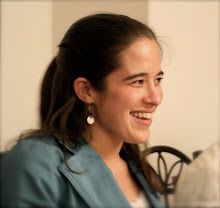
I've been thinking about how I don't post about Zambian/Tonga culture like I did about Indian culture. I think there are two primary reasons for that. One is that, although it's new in my remembered experience, much of Zambian culture is not surprising to me since I grew up hearing about it from my parents. So the fact that I curtsy when shaking hands, that one shows respect for the person greeted in shaking hands by placing the other hand below your own outstretched arm slightly distal to the elbow, that women carry the heavy loads and the children, that we eat nsima and relish with our hands, etc. simply don't strike me as novel.
The second reason is the more difficult for me to acknowledge and process. There are parts of Zambian culture that are difficult for me personally, particularly as a woman. In many small ways, I am treated differently because I am a woman. Different things are expected of me. I think women and men also have similarly different roles and expectations of behavior in parts of India, but those roles/expectations didn't apply to me as a foreigner. Because of this, they didn't bother me personally so much. I feel half ashamed of this; should I care more about these different expectations only if they impact on me? Then again, their impact on me may be greater at least as far as my adjustments to them than on the people who grew up in this culture and so have their own expectations more shaped by it. But maybe I'd just like to think that so that it makes me feel better that I don't mind the cultural differences as much when they don't affect me.
It comes back to bigger questions about culture, too. For the most part, I enjoy cultural differences and learning about other cultures. But I don't think other cultures or my own are above moral judgment. Just as there are things in my own culture that I wish were different (e.g. materialism, time-focus over people-focus, prizing status and influence over character and inner worth), there are things about other cultures I wish were different.
What is hard is making judgments about another culture from the outside rather than my own from the inside. Am I simply more sensitive to things that are right and wrong here because they are different? How can I learn to be more sensitive to what is right and wrong (and not above judgment) in my own culture from being within another? How can I balance suspending judgment here while learning more about why things are the way they are and trusting that some things are value-neutral and simply different with acknowledging that some things simply should be different here as well as in my own culture? I don't have any easy answer, certainly not for how I live it here and now or in the future, but I suppose it's good to be asking the questions.
Monday, April 12, 2010

Thursday, April 8, 2010
epidemiology
It's been interesting what diseases occur here and don't occur here. I have seen no coronary artery disease and no lung, breast, or colon cancer, although that may be partly because we lack the imaging or procedural technology to catch the cancers early (CT scanning, mammography, colonoscopy). However, I have seen multiple women with cervical cancer, something I never saw in the US. It is on the differential diagnosis for any woman with a watery vaginal discharge, especially if she is HIV-positive.
Pap smears, the common screening tool used in the developed world to detect early pre-cancerous cervical changes, are hard to do on a regular basis here since it requires sending off the obtained scraping to Lusaka for pathology results some three months later. It requires an infrastructure for following up and treating abnormal results as well, which is hard to put into place. And it simply isn't part of women's thoughts for health maintenance when they're more likely to be thinking about how to make it through till the next harvest or whether their malnourished fifth child is going to be hospitalized for this episode of diarrhea or fever. On top of this, immunocompromise (as with HIV, a relatively common infection here) makes cervical cancer progress since its pathophysiology is related to the viral HPV infection, and cervical cancer actually is one of the determining criteria for which stage of immunocompromise an HIV-positive patient is in.
So these musings amounted to the fact that last OT (operating theatre) day we told two women in their fifties that they had stage IIIB cervical cancer (extending to the lower third of the vagina), which has a 40% 5-year survival rate in the best of circumstances with radiation therapy. These women will most likely not get in at the University Teaching Hospital (UTH) in Lusaka, the only place where these types of services are available in the country, in a timely manner to enable them to get the radiation. So they're sentenced to living and dying with advanced cervical cancer as it metastasizes through their pelvises, bringing difficulty passing stool and urine as well as pain. Even the pain of advanced cancer is difficult to treat where we have limited supplies of one opiate, pethidine. If any place in the world needs the HPV vaccine, which has caused such controversy among some communities in the US, this is certainly one place I would distribute it!
We had an interesting though sad case on rounds a few nights ago. The patient was being evaluated for lower abdominal pain, hematuria (blood in the urine), and amenorrhea (no periods) for three months. They did an ultrasound to rule out an ectopic pregnancy and found instead a large renal mass, palpable on re-examination of her abdomen. Again, there are no resources here to do a nephrectomy (removal of the kidney), and it is unlikely she will get in at UTH soon enough to make a difference in her prognosis...
On a positive note, I had a conversation with the ultrasonographer, a young Zambian man who is pastoring a local church while doing perhaps 200 ultrasounds a month through his job at the hospital and is in further training for ultrasounds. He mentioned the offers he has received to go to Botswana or elsewhere to earn more money for his job. His ultrasonography course is through some place in Canada, so that also opens doors. But "if you want to see change in your country," he said, "you have to be patriotic." Knowing there are other options available to him, he is choosing to stay here where he is needed and can make a difference. And make a difference he does since ultrasound and X-rays are our only imaging technologies. Thank you, God, for people who choose to give up what they could have for the longer-lasting reward of a life lived faithfully and well in service to those in need. May I remember his example.
Pap smears, the common screening tool used in the developed world to detect early pre-cancerous cervical changes, are hard to do on a regular basis here since it requires sending off the obtained scraping to Lusaka for pathology results some three months later. It requires an infrastructure for following up and treating abnormal results as well, which is hard to put into place. And it simply isn't part of women's thoughts for health maintenance when they're more likely to be thinking about how to make it through till the next harvest or whether their malnourished fifth child is going to be hospitalized for this episode of diarrhea or fever. On top of this, immunocompromise (as with HIV, a relatively common infection here) makes cervical cancer progress since its pathophysiology is related to the viral HPV infection, and cervical cancer actually is one of the determining criteria for which stage of immunocompromise an HIV-positive patient is in.
So these musings amounted to the fact that last OT (operating theatre) day we told two women in their fifties that they had stage IIIB cervical cancer (extending to the lower third of the vagina), which has a 40% 5-year survival rate in the best of circumstances with radiation therapy. These women will most likely not get in at the University Teaching Hospital (UTH) in Lusaka, the only place where these types of services are available in the country, in a timely manner to enable them to get the radiation. So they're sentenced to living and dying with advanced cervical cancer as it metastasizes through their pelvises, bringing difficulty passing stool and urine as well as pain. Even the pain of advanced cancer is difficult to treat where we have limited supplies of one opiate, pethidine. If any place in the world needs the HPV vaccine, which has caused such controversy among some communities in the US, this is certainly one place I would distribute it!
We had an interesting though sad case on rounds a few nights ago. The patient was being evaluated for lower abdominal pain, hematuria (blood in the urine), and amenorrhea (no periods) for three months. They did an ultrasound to rule out an ectopic pregnancy and found instead a large renal mass, palpable on re-examination of her abdomen. Again, there are no resources here to do a nephrectomy (removal of the kidney), and it is unlikely she will get in at UTH soon enough to make a difference in her prognosis...
On a positive note, I had a conversation with the ultrasonographer, a young Zambian man who is pastoring a local church while doing perhaps 200 ultrasounds a month through his job at the hospital and is in further training for ultrasounds. He mentioned the offers he has received to go to Botswana or elsewhere to earn more money for his job. His ultrasonography course is through some place in Canada, so that also opens doors. But "if you want to see change in your country," he said, "you have to be patriotic." Knowing there are other options available to him, he is choosing to stay here where he is needed and can make a difference. And make a difference he does since ultrasound and X-rays are our only imaging technologies. Thank you, God, for people who choose to give up what they could have for the longer-lasting reward of a life lived faithfully and well in service to those in need. May I remember his example.
Monday, April 5, 2010
communion liturgy
I loved the liturgy used at the communion service and found something with significant overlap online and wanted to share it. After a period of introspection preceding the service in which I had to acknowledge to myself a number of areas in my life where I was not depending on and submitted to God, I was fully aware of my own unworthiness of the price Jesus paid to be in a relationship with me. Thus, this communion's invitation to share in God's hospitality at his table was particularly welcome, and the pauses after each short phrase for translation to Tonga made it particularly poignant.

"Come to this sacred table, not because you must, but because you may;
Come to testify not that you are righteous, but that you sincerely love our Jesus Christ, and desire to be his true disciple;
Come not because you are strong, but because you are weak;
Come not because you have any claim on heaven's rewards, but because in your frailty and sin you stand in constant need of heaven's mercy and help;
Come not to express an opinion, but to seek a Presence and pray for a Spirit.
Come not because you are fulfilled, but because in your emptiness you stand in need of God’s grace and assurance.
Come, sisters and brothers, to this table to partake and share.
It is spread for you and me that we may again know that God has come to us, shared our common lot, and invited us to join the people of God’s reign.
And now that the Supper of the Lord is spread before you, lift up your minds and hearts above all selfish fears and cares; let this bread and this wine be to you the witnesses and signs of the grace of our Lord Jesus Christ, the love of God, and the communion of the Holy Spirit. Before the Throne of the Heavenly Father and the Cross of the Redeemer make your humble confession of sin, consecrate your lives to the Christian obedience and service, and pray for strength to do and to bear the holy and blessed will of God.”
- attributed on one website to John Hunter

http://oneyearbibleimages.com/lords_supper.jpg
"Come to this sacred table, not because you must, but because you may;
Come to testify not that you are righteous, but that you sincerely love our Jesus Christ, and desire to be his true disciple;
Come not because you are strong, but because you are weak;
Come not because you have any claim on heaven's rewards, but because in your frailty and sin you stand in constant need of heaven's mercy and help;
Come not to express an opinion, but to seek a Presence and pray for a Spirit.
Come not because you are fulfilled, but because in your emptiness you stand in need of God’s grace and assurance.
Come, sisters and brothers, to this table to partake and share.
It is spread for you and me that we may again know that God has come to us, shared our common lot, and invited us to join the people of God’s reign.
And now that the Supper of the Lord is spread before you, lift up your minds and hearts above all selfish fears and cares; let this bread and this wine be to you the witnesses and signs of the grace of our Lord Jesus Christ, the love of God, and the communion of the Holy Spirit. Before the Throne of the Heavenly Father and the Cross of the Redeemer make your humble confession of sin, consecrate your lives to the Christian obedience and service, and pray for strength to do and to bear the holy and blessed will of God.”
- attributed on one website to John Hunter
Zambia slideshow 4
We also went to a wedding coming-together celebration on Saturday afternoon, so this includes some pictures of that to give you a taste of Zambian cultural life as well as one of our modes of transportation (the back of a truck!) in addition to the Easter weekend pictures.
Easter in Zambia
It was certainly a weekend full of festivities here. Church services Thursday, Friday, and Saturday nights were followed by a 5 a.m. Sunday morning Easter sunrise service, 9 a.m. communion service, and 10:30 a.m. Easter morning service. The Easter sunrise service was particularly neat since I remember going to these as a child (and being disappointed by an 8 a.m. "sunrise" service in the States that was after sunrise and inside!). It was neat to be there with mostly women and be reminded of how the women were the first ones to the empty tomb and the first witnesses to the Resurrection. This is a culture in which women are definitely second to men in priority, and the culture of first-century ancient near east was no different. So the honoring implicit in the women's primacy in this central event of the Christian story is particularly special.

All the services involved much singing and rejoicing. There were some culturally specific ways of celebrating that were unique. The women go to the sunrise service wrapped in sheets (or old mosquito nets!) to commemmorate the linens which had wrapped the body of Jesus that the women found forsaken in the empty tomb. I forgot mine, but I did manage to remember to borrow a scarf to wear to cover my head so that I would be allowed to participate in the communion service later. I come from a church tradition often associated with head coverings - Mennonites - and some people in my home church do wear coverings, but I had never worn one before. It was an interesting experience, thinking of doing something I don't consider necessary to partake in this community's celebration of faith in equal standing. Then again, I wear skirts every day (something I don't think necessary for women) so as not to offend and to participate in the local community's life as much as possible on the same level...

After the services, we went over to the Thumas for lunch, which included some visiting friends. We ended up chatting for the afternoon and went home briefly only to join up with Abby and Heidi, two other expat young women, to go for a walk to see the sunset. So the day which began before sunrise ended with the sunset - altogether, a very satisfactory day. :) Pictures to come.

All the services involved much singing and rejoicing. There were some culturally specific ways of celebrating that were unique. The women go to the sunrise service wrapped in sheets (or old mosquito nets!) to commemmorate the linens which had wrapped the body of Jesus that the women found forsaken in the empty tomb. I forgot mine, but I did manage to remember to borrow a scarf to wear to cover my head so that I would be allowed to participate in the communion service later. I come from a church tradition often associated with head coverings - Mennonites - and some people in my home church do wear coverings, but I had never worn one before. It was an interesting experience, thinking of doing something I don't consider necessary to partake in this community's celebration of faith in equal standing. Then again, I wear skirts every day (something I don't think necessary for women) so as not to offend and to participate in the local community's life as much as possible on the same level...

After the services, we went over to the Thumas for lunch, which included some visiting friends. We ended up chatting for the afternoon and went home briefly only to join up with Abby and Heidi, two other expat young women, to go for a walk to see the sunset. So the day which began before sunrise ended with the sunset - altogether, a very satisfactory day. :) Pictures to come.
Friday, April 2, 2010
clinical update
Over the course of the week, I finished my first week on maternity which, due to the maternity doctor's absence in Choma getting his car fixed for three days, has included exactly one day of rounds and one day of OB- and gyn-related outpatient visits. But I've done more cervical exams on women in labor (albeit inaccurate ones, according to the nurse-midwife) here over the past few days (three) than in almost two years of clinical rotations in the US. We do also have rounds tomorrow, and hopefully the doctor will be back. I've been doing some reading and learning relevant OB-related Tonga in the meantime (baby moving? vaginal bleeding? contractions? leaking fluid? nursing well? milk?).
I also rounded on women's ward again, seeing some patients I knew as well as some new ones, and did my first paracentesis (for fluid in the abdomen) without ultrasound guidance, of course, and attempted several lumbar punctures (or spinal taps - 1/3 successful). For procedural-related things like those, sometimes it's nice not having residents or interns to allow to go first when there is something to be done. But we'll see how I feel about it when I become an intern in a few months!
I do think that I am gradually gaining something of a team feel as I work here. The people with whom I work seem more open to me doing things, although I think I've started asking to do more, too. I feel my judgment on some things is trusted more than previously. I remember more often to order HIV tests on practically everyone I see. I can conduct a very basic interview in Tonga as long as the answers consist of yes (ee-ee), no (pay-pay), today (sunu), a little (ashonto), or a lot (meningee). That's gratifying, too. We'll see what the next few weeks bring.
I also rounded on women's ward again, seeing some patients I knew as well as some new ones, and did my first paracentesis (for fluid in the abdomen) without ultrasound guidance, of course, and attempted several lumbar punctures (or spinal taps - 1/3 successful). For procedural-related things like those, sometimes it's nice not having residents or interns to allow to go first when there is something to be done. But we'll see how I feel about it when I become an intern in a few months!
I do think that I am gradually gaining something of a team feel as I work here. The people with whom I work seem more open to me doing things, although I think I've started asking to do more, too. I feel my judgment on some things is trusted more than previously. I remember more often to order HIV tests on practically everyone I see. I can conduct a very basic interview in Tonga as long as the answers consist of yes (ee-ee), no (pay-pay), today (sunu), a little (ashonto), or a lot (meningee). That's gratifying, too. We'll see what the next few weeks bring.
Holy Week
I realized last Sunday in Livingstone that it was Palm Sunday when we saw a larger parade of brightly dressed Zambians coming out of the church near Jolly Boys Backpackers carrying palm fronds and singing. I was sad to miss the day's celebration in the Macha church but began to look forward to seeing how the rest of Holy Week's events are marked in this place.
Last night was Maundy Thursday, the night prior to Jesus' crucifixion on today, Good Friday, a time to remember the Last Supper and all its significance, his suffering in the Garden of Gethsemane, his trials, and his desertion by his disciples. Linda and I traipsed off a bit late for the service at 1830 to the church after our dinner at the MIAM cafeteria. Upon arriving, the church was dark and no one visible. We were about to turn around when Mrs. Spurrier, wife of Dr. Spurrier with whom we work in the hospital, came up from the dark church. Cheered by each other's company, we decided to wait a bit longer to see if the advertised service would happen.
After about 15-20 minutes, about 10-15 people had assembled, so we entered the sanctuary. The power was off, so we sang some hymns (including some I knew the tunes and the words in English) by flashlight and candlelight. Despite the small group in a T-shaped church that usually seats about 800, I've been told, the singing was hearty, lovely, and inspiring. We then heard a short, bilingual message about Passover and Jesus' institution of the new covenant and fulfillment of the Passover salvation of the Hebrew people in Egypt by becoming our Passover lamb. As we were preparing for the closing song and prayer, about 20 more people came in. They joined us for the last part of the service, and then we left.
I've been to a number of Maundy Thursday services, often called Tenebrae (service of shadows), which start out in light and end in darkness (either by the gradual extinguishing of candles or lightbulbs). This one started in the gathering darkness of late twilight as we walked to the church, proceeded through the companionable sharing of flashlights and candles to read Tonga song words or Bible readings, and ended again in darkness lit by the Milky Way as we walked home. We'll have another service tonight, tomorrow night, and two on Easter Sunday.

As Linda and I read the events of Thursday night from the account according to Matthew, I was reminded of light and darkness in the story. The lights of the upper room where Jesus breaks the bread and passes the cup. The darkness of the garden of Gethsemane. The lights of approaching torches that allow visualization of the betraying kiss. The lights on His face as he is silent under accusation on trial first before the Sanhedrin and then Pilate. The dim light of early morning and fading night fires on Peter's tear-streaked face as he mourns that he has betrayed his Lord thrice before the cock crowed. The darkness behind the blindfold from which Jesus was mocked and asked to identify those beating and taunting him. The utter darkness of mid-day on Good Friday as the One who is the Resurrection and the Life breathed his last, crying, "It is finished."
And I look forward to celebrating the shafts of bright early morning light that lit the empty tomb on Easter Sunday. But for now, I wait. I wait in a world in which innocent people suffer, in which the one truly innocent Man was brutally flogged, forsaken, and hung on a cross. I wait in a world in which we don't live up to our best hopes for ourselves - hopes of courage, faithfulness, sacrifice, a world in which we may even betray our very best Friend. I wait in a world in which God's call for you, for me, may include walking through pain to achieve his ends; it did for his Son. I wait.
Last night was Maundy Thursday, the night prior to Jesus' crucifixion on today, Good Friday, a time to remember the Last Supper and all its significance, his suffering in the Garden of Gethsemane, his trials, and his desertion by his disciples. Linda and I traipsed off a bit late for the service at 1830 to the church after our dinner at the MIAM cafeteria. Upon arriving, the church was dark and no one visible. We were about to turn around when Mrs. Spurrier, wife of Dr. Spurrier with whom we work in the hospital, came up from the dark church. Cheered by each other's company, we decided to wait a bit longer to see if the advertised service would happen.
After about 15-20 minutes, about 10-15 people had assembled, so we entered the sanctuary. The power was off, so we sang some hymns (including some I knew the tunes and the words in English) by flashlight and candlelight. Despite the small group in a T-shaped church that usually seats about 800, I've been told, the singing was hearty, lovely, and inspiring. We then heard a short, bilingual message about Passover and Jesus' institution of the new covenant and fulfillment of the Passover salvation of the Hebrew people in Egypt by becoming our Passover lamb. As we were preparing for the closing song and prayer, about 20 more people came in. They joined us for the last part of the service, and then we left.
I've been to a number of Maundy Thursday services, often called Tenebrae (service of shadows), which start out in light and end in darkness (either by the gradual extinguishing of candles or lightbulbs). This one started in the gathering darkness of late twilight as we walked to the church, proceeded through the companionable sharing of flashlights and candles to read Tonga song words or Bible readings, and ended again in darkness lit by the Milky Way as we walked home. We'll have another service tonight, tomorrow night, and two on Easter Sunday.

As Linda and I read the events of Thursday night from the account according to Matthew, I was reminded of light and darkness in the story. The lights of the upper room where Jesus breaks the bread and passes the cup. The darkness of the garden of Gethsemane. The lights of approaching torches that allow visualization of the betraying kiss. The lights on His face as he is silent under accusation on trial first before the Sanhedrin and then Pilate. The dim light of early morning and fading night fires on Peter's tear-streaked face as he mourns that he has betrayed his Lord thrice before the cock crowed. The darkness behind the blindfold from which Jesus was mocked and asked to identify those beating and taunting him. The utter darkness of mid-day on Good Friday as the One who is the Resurrection and the Life breathed his last, crying, "It is finished."
And I look forward to celebrating the shafts of bright early morning light that lit the empty tomb on Easter Sunday. But for now, I wait. I wait in a world in which innocent people suffer, in which the one truly innocent Man was brutally flogged, forsaken, and hung on a cross. I wait in a world in which we don't live up to our best hopes for ourselves - hopes of courage, faithfulness, sacrifice, a world in which we may even betray our very best Friend. I wait in a world in which God's call for you, for me, may include walking through pain to achieve his ends; it did for his Son. I wait.
Subscribe to:
Posts (Atom)